

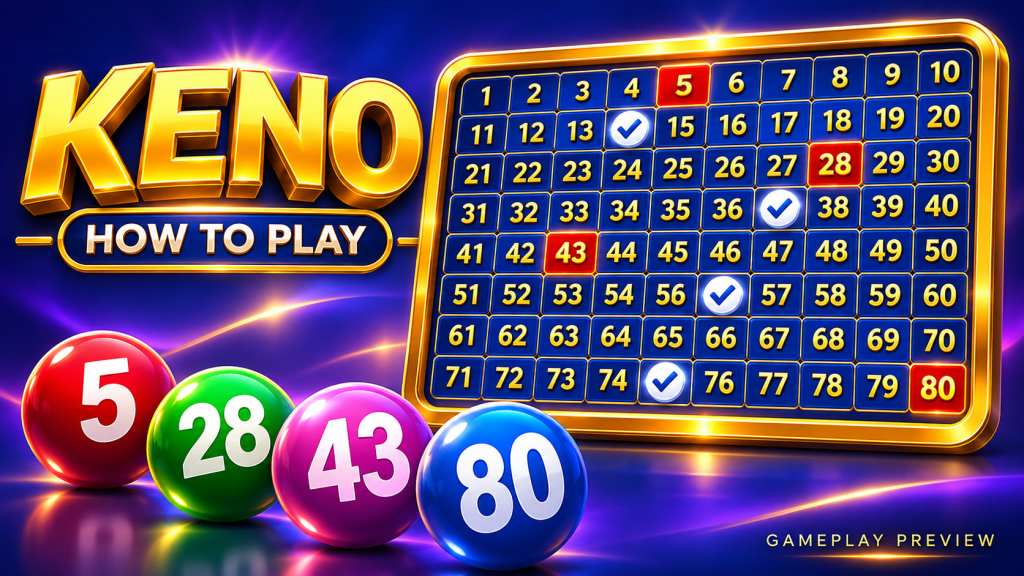
Keno and Bingo both reveal numbers, but the way a ticket wins is usually different. Keno centers on how many of your selections match; many Bingo games center on completing a required card pattern. This cc6 guide compares those mechanics so you can recognize what each game asks you to follow.
The Main Difference: Match Count or Card Pattern
In conventional Keno, the location of selected numbers on the board does not determine the standard match-count prize. A row of adjacent choices and a scattered selection are evaluated by the same match rules when the ticket size is identical.
In many Bingo formats, the arrangement matters. A game may require a line, four corners, a full card or another announced pattern. Some modern variants add different scoring features, so the displayed win condition remains the starting point.
| Feature | Keno | Many traditional Bingo formats |
|---|---|---|
| Number selection | Player chooses spots or uses Quick Pick | Player receives or chooses issued cards |
| Main win condition | Specified number of matches | Required marked pattern |
| Typical visual focus | Selected numbers and hit counter | Card layout and completed positions |
| Prize reference | Paytable for selected spot count | Prize and pattern rules for the game |
| Round structure | Often a fixed draw count | Often continues until a winning condition |
How Number Selection Works
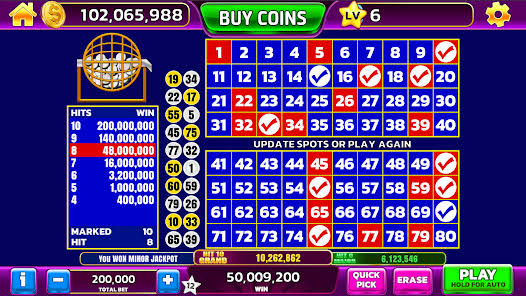
Keno lets you build a ticket from the available pool. A five-spot ticket contains five chosen numbers. If three appear in the draw, the result is described as three catches out of five selections.
Bingo usually starts with numbers already arranged on a card. You may be able to choose among cards, but that is different from individually placing every number. For cc6 readers who enjoy creating a personal selection, this distinction is often more relevant than the visual theme.
Follow One Example of Each Game
A Keno Match Example
Suppose you choose 8, 19, 27, 44 and 63. If the draw contains 8, 27 and 63, you have three matches on a five-spot ticket. Open the five-spot paytable and locate the three-match entry. Whether that result pays, and how much, depends on that version.
A Bingo Pattern Example
Suppose the announced target is one horizontal line. Marking several numbers in different rows may leave the card without a completed line. The location of the marked squares matters because it forms the required pattern.
Compare the Pace and Screen Layout
Keno often makes each round self-contained: selections are accepted, a set of numbers is drawn and the result is settled. Bingo can place more emphasis on following progress toward a pattern across one or several cards.
Neither game name guarantees a particular speed. Draw-based products, instant games and multiplayer sessions can all have different pacing. This cc6 comparison therefore focuses on mechanics rather than promising one fixed style of session.
How to Read Prizes in Each Format
| Question | Keno check | Bingo check |
|---|---|---|
| What result qualifies? | Spot count and matches | Announced winning pattern |
| What does it pay? | Corresponding paytable entry | Pattern award or prize pool |
| Are there extras? | Bonus-ball or jackpot conditions | Side features or extra pattern awards |
| Can prizes be shared? | Check caps and game rules | Check multiple-winner rules |
Do not assume a larger number pool makes one game automatically easier or harder. The draw process, ticket structure and winning condition all matter.
Which Format Fits Your Preferences?
Choose Keno when selecting your own numbers and checking a match-count table sounds appealing. Explore Bingo when watching a card develop toward a pattern is the experience you want. With the differences clear, cc6 readers can compare individual games through their actual rules and interface.