

The most easily overlooked part of a fish game is the repeated cost of firing. A small amount per shot can become a substantial total when the cannon fires continuously.
For cc6 readers, understanding this spending pattern helps put target rewards into context. A displayed multiplier says little about the final result unless the cost of unsuccessful attempts is also considered.
Calculate the Cost of a Shooting Sequence
The basic calculation is straightforward: multiply the cost per shot by the number of shots fired. This gives gross shot spending before any rewards are credited.
Illustrative Shot Spending
| Assumed Shot Cost | 50 Shots | 100 Shots | 200 Shots |
|---|---|---|---|
| ₱0.50 | ₱25 | ₱50 | ₱100 |
| ₱1.00 | ₱50 | ₱100 | ₱200 |
| ₱2.00 | ₱100 | ₱200 | ₱400 |
These are hypothetical values. They do not represent verified minimum stakes, expected losses or available settings in a named game.
If 100 shots cost ₱100 and associated rewards total ₱65, the net result for those transactions is a ₱35 loss. The gross cost remains ₱100 even though some money was returned.
Separate Session Funds from Essential Spending
Only discretionary entertainment money should be considered for gambling. Funds needed for bills, food, rent or savings commitments should stay outside the session balance.
Readers using cc6 budgeting guides can set a maximum amount and a time limit before opening a game. Reaching either limit provides a clear stopping point without depending on a final target appearing.
Why Chasing One Fish Can Become Expensive
A target with a large displayed reward can encourage continued shooting. However, money already spent is not evidence that capture is approaching.
Unless the rules disclose a specific progress mechanic, repeated failures should not be interpreted as building toward a guaranteed payout. Increasing the shot value to recover earlier losses raises the amount at risk.
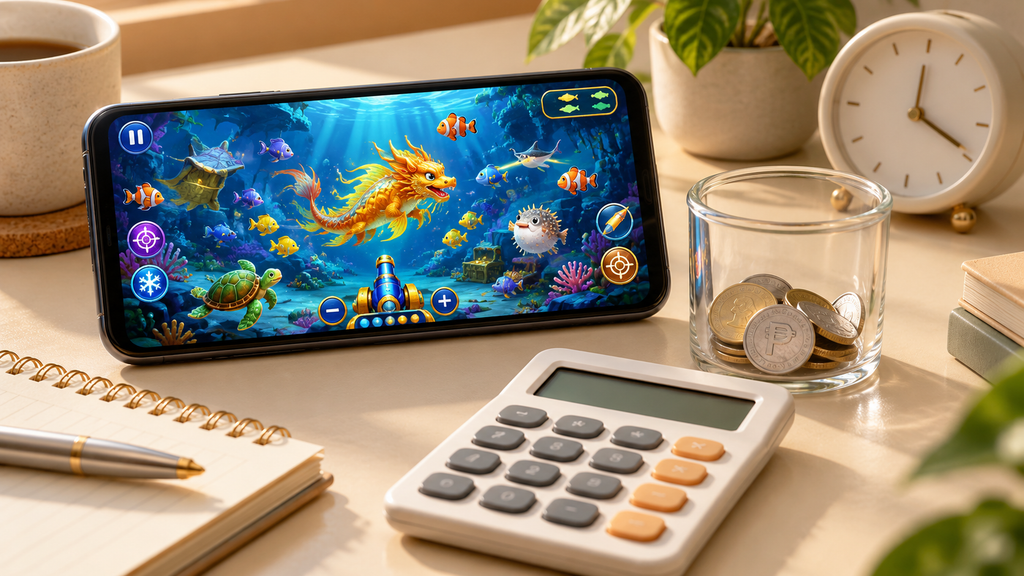
Watch Continuous Fire Carefully
With auto-fire, spending depends on both shot cost and firing speed. A low stake can still consume a session allowance quickly if many shots are fired.
For cc6 readers, review the balance at regular intervals and stop continuous firing before checking menus or stepping away. A budget is useful only if the controls allow it to be followed.
Frequently Asked Questions
Does a Larger Balance Improve the Odds?
A larger balance can support more paid attempts. It does not, by itself, improve capture probability or the return on each shot.
Can a Stop-Loss Rule Make the Game Profitable?
No. A limit controls spending exposure; it does not change the reward system or create a positive expected return.
Are Small Stakes Risk-Free?
No. Repeated small costs can accumulate, particularly during long sessions or continuous shooting.
Final Thoughts
Shot costs deserve the same attention as rewards. The practical value of a cc6 spending guide is helping readers recognize total exposure and follow a limit, without suggesting that budgeting guarantees wins.