


Learning how to play Wild Ace starts with a small set of interface questions: where are the rules, what does one round cost and where does the final result appear? This beginner walkthrough for cc6 readers follows those questions in the order a new player encounters them.
You do not need to memorize every feature before opening a demo. You do need to understand the stake and avoid treating familiar card artwork as an instruction to play poker.
Step 1: Confirm the Game and Open Its Rules
Check the title on the game screen. Reviews can mix Wild Ace with similarly named card slots, so confirm that the paytable you read belongs to the game you opened.
Locate the information or help control. The symbol descriptions, payout rules and feature explanations are more useful than relying only on a lobby thumbnail or a short promotional description.
| Before the first round | What to find |
|---|---|
| Game identity | Title and provider information |
| Symbol payouts | The combinations that qualify |
| Wild rules | Substitution permissions and exceptions |
| Scatter rules | Bonus requirements |
| Stake control | Total wager for one paid round |
| Configuration details | RTP and maximum payout, if displayed |
Step 2: Choose the Total Wager
Use the controls to select an amount within a limit chosen in advance. Confirm the currency and the total, especially if the interface uses several stake settings.
A practical cc6 habit is to pause after adjusting the wager and read the final amount again. The selected stake should be a deliberate choice rather than an unnoticed result of tapping a control.
Step 3: Recognize Three Symbol Roles
Regular Symbols
These form combinations according to the paytable. Artwork alone does not tell you the exact payout, so use the stated values rather than assuming an ace always produces a large return.
Wild Symbols
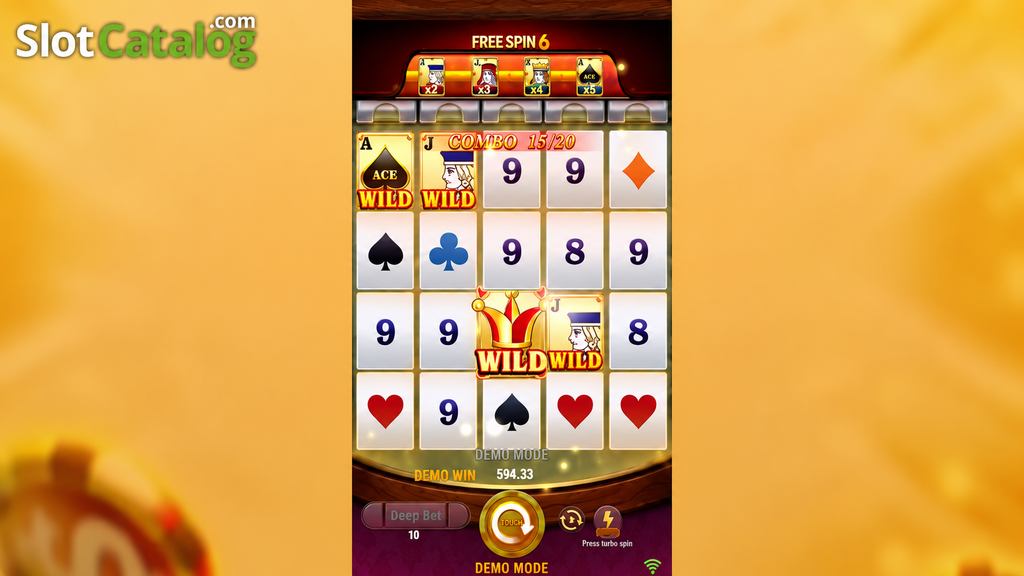
Wilds substitute within the limits described by the rules. An exception matters just as much as a substitution: if a special symbol cannot be replaced, a wild does not remove that requirement.
Scatters
Scatters follow their own evaluation conditions. Count and placement rules should be read directly instead of inferred from where ordinary wins appear.
Step 4: Observe the Complete Round
Start a round and let its events finish. A winning display can lead to symbol removal, replacement and further evaluation. Follow the animation through to the settled payout before touching another control.
For cc6 readers, the useful learning goal is to tell a completed round from a continuing cascade. Several successful matches can belong to the same wager.
Step 5: Compare the Payout with the Cost
A payout is not automatically a profit. Suppose an illustrative round costs ₱10 and credits ₱6. It produced a payout, but its net result is a ₱4 loss. If a ₱10 round credits ₱18, its net result is an ₱8 gain.
| Illustrative stake | Illustrative payout | Net round result |
|---|---|---|
| ₱10 | ₱0 | −₱10 |
| ₱10 | ₱6 | −₱4 |
| ₱10 | ₱10 | ₱0 |
| ₱10 | ₱18 | +₱8 |
These are arithmetic examples, not Wild Ace paytable values or expected outcomes.
Step 6: End with a Clear Stopping Point
If you are testing a demo, stop when the controls and round structure make sense. If you choose paid play, follow the time and spending limits set beforehand. Do not extend a session merely to see a particular animation.
For cc6 readers, understanding one ordinary round is a stronger starting point than chasing the most complicated bonus. Once the stake, symbol roles and settled result are clear, the additional features become easier to read.